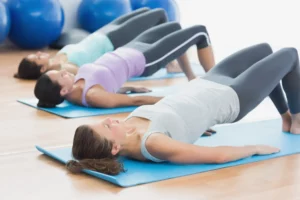
6 Fascial Fitness Training Principles to Boost Mobility, Strength & Recovery

By Dominic Pereira

When we think of fitness, we often picture toned muscles, intense cardio sessions, and strong cores. But there’s a hidden network beneath it all that plays a crucial role in how we move, feel, and recover, our fascia. This connective tissue system weaves through the entire body, supporting muscles, transmitting force, and influencing everything from posture to performance.

In this blog, we’ll explore 6 essential Fascial Fitness principles that will help you train smarter, move better, and feel more connected to your body.

What Is Fascial Fitness?

Fascial Fitness is an innovative approach to movement that focuses on training the body’s connective tissue system, the fascia. Often overlooked in traditional training, fascia is the web-like matrix that wraps around your muscles, organs, and bones. When healthy, fascia is elastic, hydrated, and supportive. When neglected, it becomes stiff and restrictive, leading to pain, injury, and limited mobility.

The 6 Fascial Fitness Training Principles

1. Elastic Recoil & Bouncing

Fascial tissue loves dynamic, elastic movement. Think of a cat jumping or a gazelle bounding across a field. These spring-like motions train the fascia’s elastic properties, helping you move with more power and grace.

How to train it:

Add light, rhythmic bouncing to your warm-ups or include rebounding exercises like skipping, hopping, or trampoline work. Pilates jump boards are also great!

2. Pre-Stretch and Loading

Fascial tissues respond well to being pre-loaded before movement. This trains the body’s ability to store and release elastic energy, just like stretching a rubber band before releasing it.

How to train it:

Use multi-directional movements that involve a wind-up (pre-stretch), like a spiral lunge or dynamic arm swings. Movements should be smooth and controlled, not jerky.

3. Varied Movement Patterns

Fascia thrives on variety and novelty. Repeating the same patterns over and over can lead to overuse injuries and fascial thickening in unwanted areas.

How to train it:

Incorporate non-linear and 3D movements into your routine. To awaken underused fascial chains, try spirals, diagonals, and circular motions in exercises.

4. Proprioceptive Refinement

Fascial training enhances your proprioception, your body’s ability to sense movement and position. Better proprioception means better coordination, balance, and injury prevention.

How to train it:

Slow down movements. Add barefoot training, balance work, or closed-eye exercises to challenge the body’s sensory systems and encourage better body awareness.

6 Fascial Fitness Training Principles to Boost Mobility, Strength & Recovery - A man taking an online Fascial Fitness Class

5. Hydration and Sliding Surfaces

Healthy fascia needs hydration to glide and slide efficiently. Dehydrated fascia becomes sticky and restrictive, which affects your flexibility and function.

How to train it:

Use myofascial release techniques like foam rolling, massage balls, or fascial stretching. Drink water consistently and stay mobile throughout the day to keep fascia supple.

6 Fascial Fitness Training Principles to Boot Mobility, Strength & Recovery - A woman using a foam roller to stretch her legs.

6. Tensile Strength & Long Chains

Fascia transmits force across long myofascial chains, like from your foot to your opposite shoulder. Training these lines builds integrated strength and functional movement.

How to train it:

Incorporate whole-body movements that involve diagonal force transfer (e.g. lunges with rotation, Pilates spirals, or dynamic kettlebell swings).

Why Train Fascia?

  • Reduce injury risk
  • Improve mobility and range of motion
  • Enhance athletic performance
  • Promote faster recovery
  • Build a stronger, more responsive body

Fascial Fitness isn’t just a trend; it’s the missing piece in many training programs. By understanding and applying these six principles, you’ll move better, feel better, and perform better.

Ready to Feel the Difference?

Discover how movement, breath, and expert guidance can transform the way your body feels. Whether you’re easing tension, building strength, or improving mobility, our classes are designed to support your goals. Join us and experience the difference for yourself.

If you liked this, you'll love these...

What is Fascia?

Fascia is found everywhere in the body. In this article, we look at what fascia is, how it affects the body and why we want our fascia to be fit!

Read More »

We use cookies to track visitors, measure ads, ad campaign effectiveness and analyze site traffic. We may also share information about your use of our site with 3rd parties. For more info, see, our Cookies Policy, our Privacy Policy. By clicking “Accept All” you agree to the storing of all cookies on your device. In case you don’t choose one of these options and use our website, we will treat it as if you have accepted all cookies.

We use cookies to track visitors, measure ads, ad campaign effectiveness and analyze site traffic. We may also share information about your use of our site with 3rd parties. For more info, see, our Cookies Policy, our Privacy Policy. By clicking “Accept All” you agree to the storing of all cookies on your device. In case you don’t choose one of these options and use our website, we will treat it as if you have accepted all cookies.