Why Fascial Fitness Improves the Way You Move

By Dominic Pereira

Fascia is the connective tissue that surrounds and supports muscles, joints, organs, and other structures throughout the body. Think of it as a web-like network that connects everything together, helping your body move efficiently and smoothly. While muscles and joints often get the spotlight when it comes to movement, fascia plays an equally important role in how your body feels and performs every day.

Whether you’re walking, exercising, reaching for something on a shelf, or getting up from a chair, healthy fascia contributes to better mobility, coordination, and overall movement quality.

Understanding fascia and learning how to support its health can help you move more comfortably and confidently.

What Is Fascia and Why Is It Important?

Fascia is a continuous layer of connective tissue that runs throughout the entire body. It surrounds muscles, wraps around organs, supports joints, and connects different parts of the body into one integrated system.

Why Fascial Fitness Improves the Way You Move: Structure of skeletal muscle diagram
Image Credit: Holding Space

Unlike muscles, which contract to create movement, fascia helps transmit force and coordinate movement patterns across the body. Because it connects everything, tension or restriction in one area can influence how another area moves.

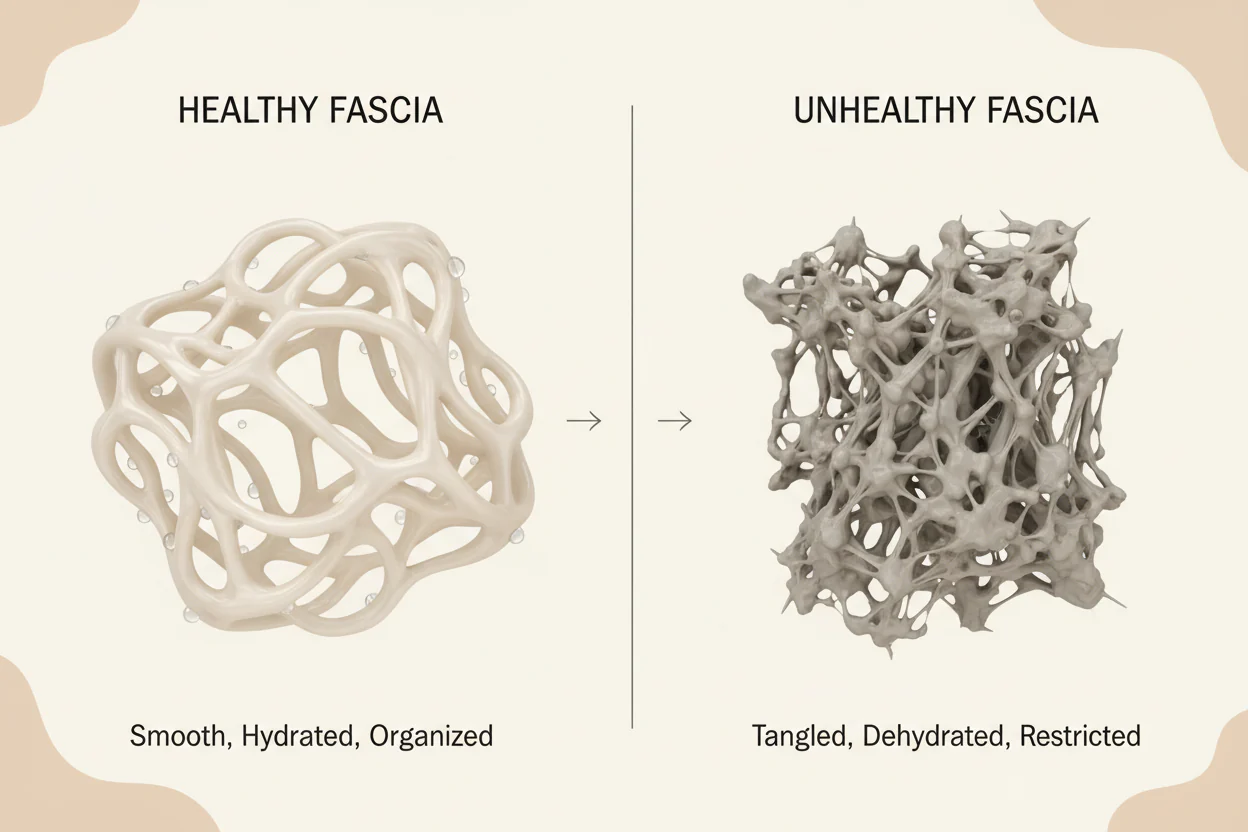
Healthy fascia is flexible, hydrated, and resilient. It allows tissues to glide smoothly against one another, supporting efficient movement and reducing unnecessary strain.

healthy-and-unhealthy-fascia
Image Credit: Totally Well

What Is Fascial Fitness?

Fascial fitness refers to movement practices that help maintain and improve the health, elasticity, and function of the fascial system.

Traditional strength training primarily focuses on building muscle, while flexibility training often focuses on stretching muscles and joints. Fascial fitness takes a broader approach by targeting the connective tissue network that supports movement throughout the body.

Key elements of fascial fitness include:

  • Improving tissue elasticity
  • Supporting hydration within connective tissues
  • Encouraging movement variety
  • Enhancing the body’s ability to absorb and transfer force
  • Promoting responsiveness and coordination

The goal is not simply to become stronger or more flexible but to move more efficiently and comfortably.

How Fascia Affects the Way You Move

Because fascia connects the entire body, its condition can significantly influence movement quality.

Mobility

Healthy fascia allows joints and muscles to move through their full range of motion. When fascia becomes restricted or less elastic, movement may feel limited or stiff.

Flexibility

Many people assume flexibility depends solely on muscles. However, the fascial system also affects how easily tissues lengthen and adapt during movement.

Coordination

Fascia helps distribute forces throughout the body. This interconnected network supports smooth, coordinated movement patterns rather than isolated muscle actions.

Efficiency of Movement

When fascia functions well, movement often feels more fluid and requires less effort. Healthy connective tissue helps the body store and release energy efficiently during activities such as walking, running, and exercising.

Signs Your Fascia May Need Attention

The body often provides clues when the fascial system is not functioning optimally.

Common signs include:

  • Persistent stiffness, especially after sitting for long periods
  • Reduced range of motion
  • Ongoing feelings of tension or discomfort
  • Movement that feels restricted or awkward
  • Feeling "tight" even after stretching regularly

While these symptoms can have multiple causes, poor fascial health may be a contributing factor.

How to Improve Fascial Health

The good news is that fascia responds positively to regular movement and healthy lifestyle habits.

Move in Different Ways

Repeating the same movements every day can limit the variety of stimulation fascia receives. Incorporating different movement patterns helps keep connective tissues adaptable and responsive.

Focus on Controlled, Dynamic Movement

Gentle, controlled movement is highly effective for supporting fascial health. Exercises that combine strength, mobility, balance, and coordination can encourage fascia to remain resilient and functional.

Prioritise Consistency

When it comes to fascia, consistency is often more important than intensity. Regular movement sessions can provide greater long-term benefits than occasional intense workouts.

Stay Hydrated

Fascia contains a significant amount of water. Proper hydration supports tissue health and helps connective tissues maintain their ability to glide and move effectively.

Allow Time for Recovery

Rest and recovery are important components of fascial health. Adequate sleep and recovery periods help tissues adapt and repair.

Why Pilates Supports Fascial Fitness

Pilates is particularly well-suited to supporting fascial fitness because it emphasizes controlled, intentional movement and whole-body integration.

Rather than isolating individual muscles, Pilates encourages the body to work as a connected system. This aligns closely with the way fascia functions throughout the body.

Benefits of Pilates for fascial health include:

Controlled Movement

Pilates exercises focus on precision and control, helping improve body awareness and movement quality.

Full-Body Integration

Movements are designed to engage multiple areas of the body simultaneously, reflecting the interconnected nature of fascia.

Strength and Mobility Balance

Pilates develops strength while also promoting mobility and flexibility, creating balanced movement patterns that support healthy connective tissue.

If you’re looking to improve how your body moves, participating in regular Pilates classes can be an effective way to support both muscular strength and fascial health. Explore our Pilates classes in Cape Town, or join us for a private session at moveOn10, where we use the classical equipment to explore your unique fascial needs and potential.

Better Movement Starts with Healthy Fascia

Fascia is a vital part of the body’s movement system. It connects muscles, joints, and tissues into one integrated network that influences mobility, flexibility, coordination, and overall movement quality.

By focusing on consistent movement, proper recovery, hydration, and exercises that encourage whole-body integration, you can support healthier fascia and improve the way you move.

Small, sustainable changes often produce meaningful improvements over time. Investing in fascial health is ultimately an investment in better movement for everyday life.

If you’re looking to improve mobility, strength, and overall movement quality, explore our Pilates classes at MoveOn 89.

Frequently Asked Questions

What is fascia in simple terms?

Fascia is a connective tissue network that surrounds and supports muscles, joints, organs, and other structures throughout the body. It helps everything work together during movement.

How do you improve fascia health?

You can support fascia health through regular movement, staying hydrated, practising exercises such as Pilates, incorporating movement variety, and prioritising recovery.

Is fascia the same as muscle?

No. Muscles create movement by contracting, while fascia is connective tissue that supports, surrounds, and links different structures throughout the body.

Can Pilates improve fascia?

Yes. Pilates promotes controlled, full-body movement patterns that support fascial elasticity, mobility, coordination, and overall movement quality.

Why does fascia become tight?

Fascia can become less mobile due to factors such as inactivity, repetitive movement patterns, stress, poor hydration, or prolonged periods of sitting.

Ready to Support Your Fascial Health?

Whether you prefer a group mat class or a private reformer session, our Cape Town-based Pilates studio offers expert instruction to help your fascia — and your whole body — move better. Book your Pilates class today!

If you liked this, you'll love these...

Fascial Fitness

Fascial Fitness and Rehabilitation

Fascia, the connective tissue that surrounds muscles, bones, and organs, plays a crucial role in maintaining our physical health and overall well-being. Let’s delve into the importance of fascia, how it works, and practical steps to incorporate it into your fitness routine.

Read More »

We use cookies to track visitors, measure ads, ad campaign effectiveness and analyze site traffic. We may also share information about your use of our site with 3rd parties. For more info, see, our Cookies Policy, our Privacy Policy. By clicking “Accept All” you agree to the storing of all cookies on your device. In case you don’t choose one of these options and use our website, we will treat it as if you have accepted all cookies.

We use cookies to track visitors, measure ads, ad campaign effectiveness and analyze site traffic. We may also share information about your use of our site with 3rd parties. For more info, see, our Cookies Policy, our Privacy Policy. By clicking “Accept All” you agree to the storing of all cookies on your device. In case you don’t choose one of these options and use our website, we will treat it as if you have accepted all cookies.